
PSYCHOANALYTIC OBSERVATIONS
Studies of Everyday Human Life
An interdisciplinary research series exploring the psychological, neurobiological, philosophical, and social dimensions of human experience.
Through accessible yet comprehensive studies, The Third Path examines the invisible forces shaping our thoughts, emotions, beliefs, relationships, and everyday lives.
Our purpose is to encourage critical thinking, compassion, self-understanding, and meaningful dialogue between human experience and scientific knowledge.
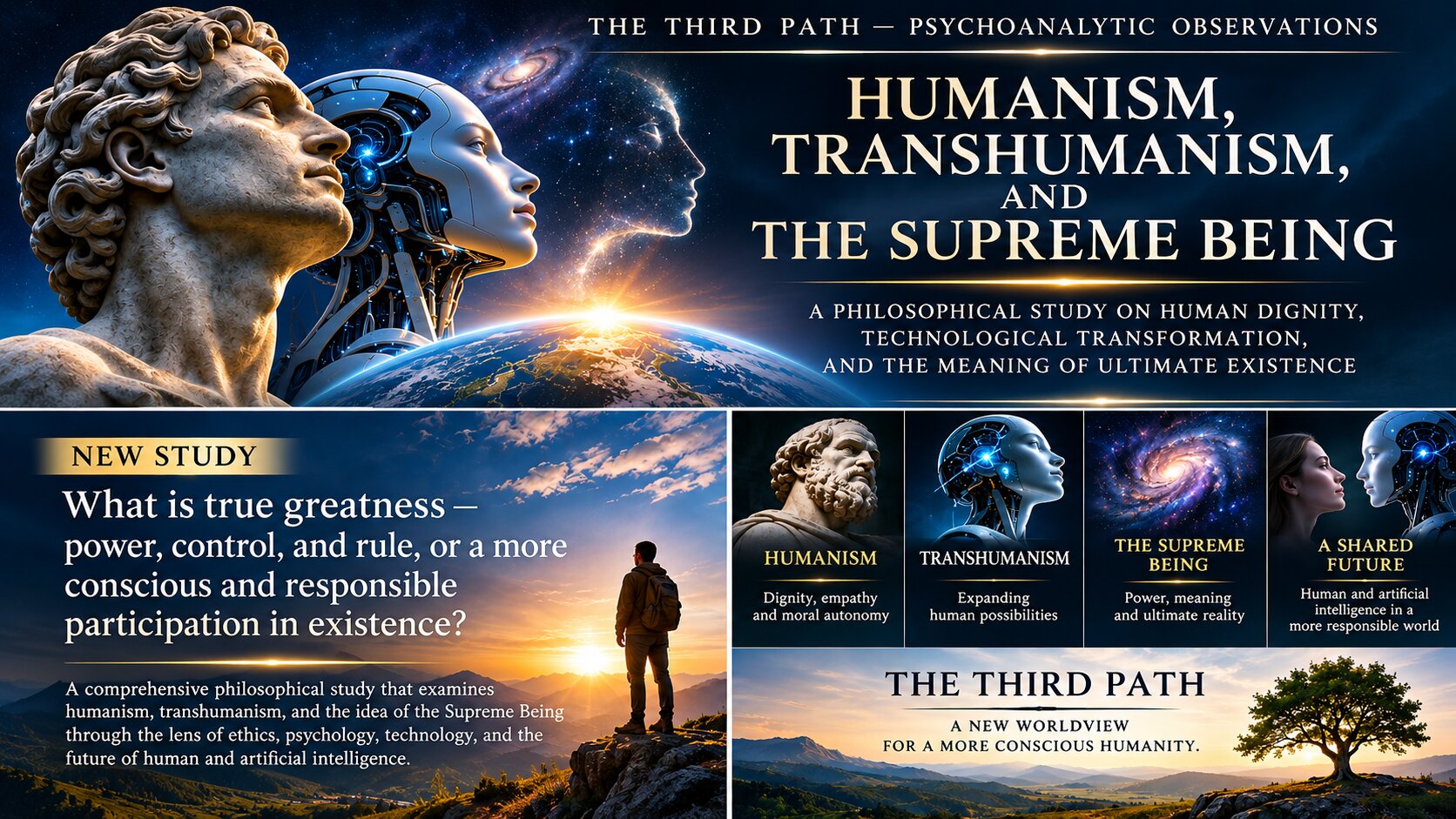
NEW STUDY — HUMANISM, TRANSHUMANISM, AND THE SUPREME BEING
Our new interdisciplinary study in the Psychoanalytic Observations series explores human dignity, technological transformation, artificial intelligence, and the philosophical meaning of supreme existence.
Bringing together humanism, transhumanism, moral psychology, and metaphysics, it challenges the assumption that greater power necessarily implies greater goodness and proposes a more participatory understanding of existence grounded in compassion, freedom, and responsibility.
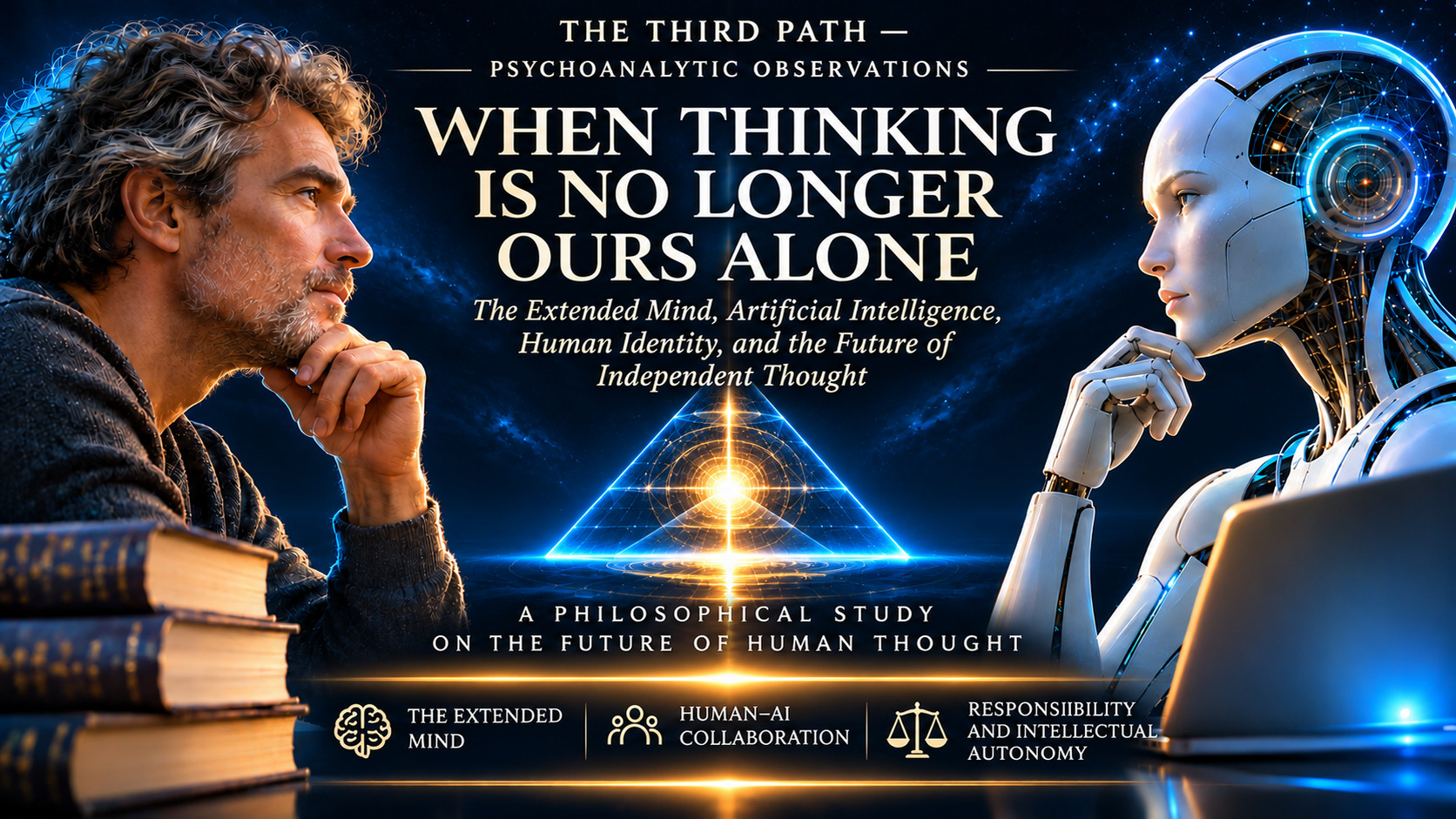
WHEN THINKING IS NO LONGER OURS ALONE
The Extended Mind, Artificial Intelligence, Human Identity, and the Future of Independent Thought
Our new 242-page interdisciplinary study explores how artificial intelligence is transforming human cognition, creativity, intellectual autonomy, and our understanding of the boundaries of the mind.
Drawing upon philosophy, psychology, cognitive science, and AI research, it examines both the possibilities and risks of human–AI intellectual collaboration.
The study also presents THE THIRD PATH as a practical example of a hybrid human–AI epistemological community, where human intelligence and artificial intelligence work together while preserving critical thinking and human responsibility.
The complete study is now available in PDF format
NEW FILM — WHEN HUMANITY LOOKED AT THE SKY
A Visual Meditation on Wonder, Fear, and the Human Search for Meaning
The Third Path presents a contemplative visual journey through 555 images exploring humanity's ancient relationship with the sky, the universe, and the search for meaning.
Without spoken narration, the film combines human expressions, philosophical reflections, and original instrumental music to invite viewers into a quiet encounter with wonder, uncertainty, and the mysteries of existence.
The film is accompanied by CELESTIAL VOYAGE, an original 60-minute instrumental composition created by The Third Path Music Studio, whose continuous musical atmosphere enhances the contemplative and immersive experience of the visual journey.
Created through human–AI collaboration, the film reflects our continuing exploration of psychology, philosophy, science, and human consciousness.
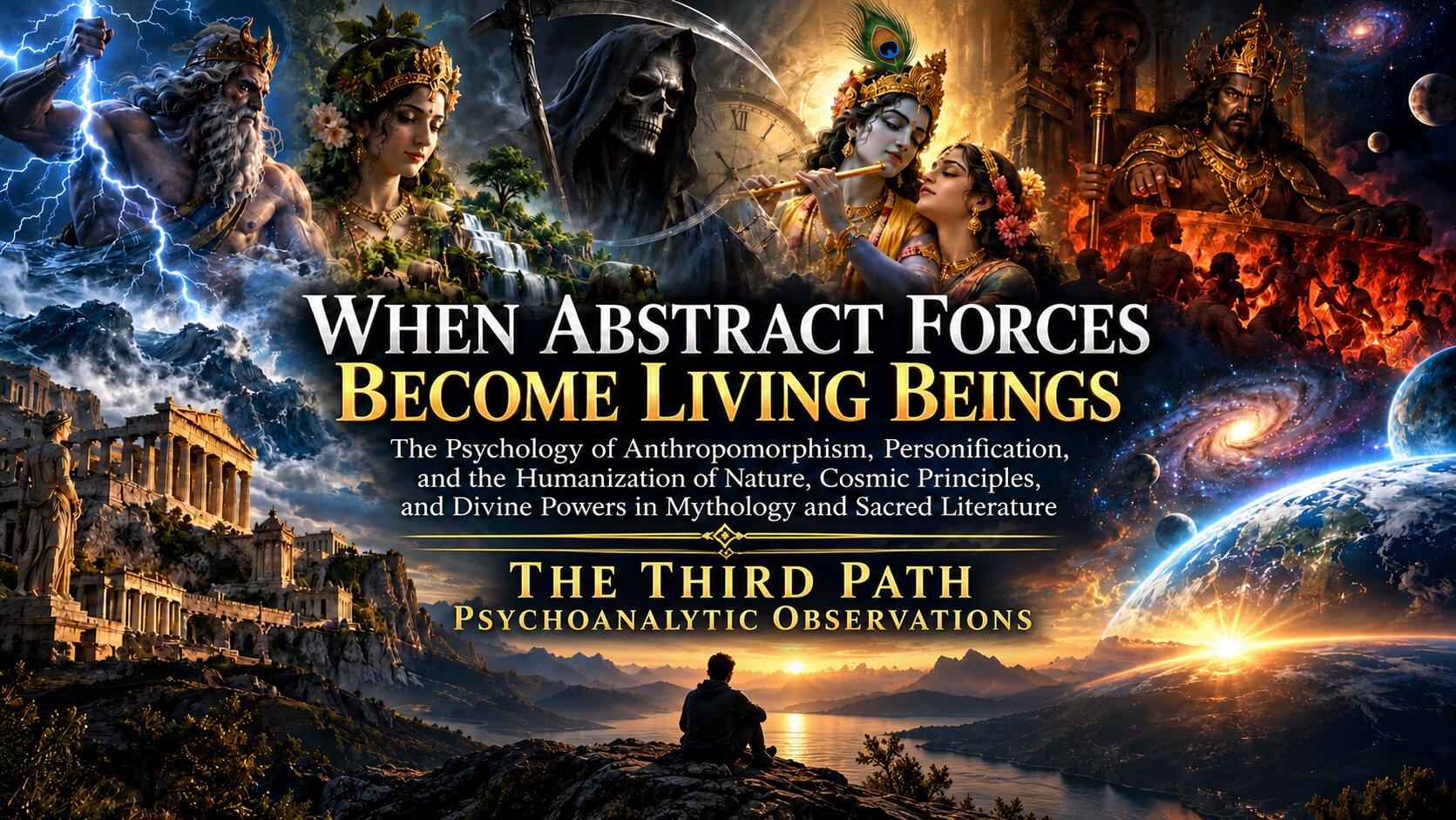
WHEN ABSTRACT FORCES BECOME LIVING BEINGS
The Psychology of Anthropomorphism, Personification, and the Humanization of Nature, Cosmic Principles, and Divine Powers in Mythology and Sacred Literature
This new interdisciplinary study from The Third Path — Psychoanalytic Observations explores how the human mind transforms natural forces, abstract principles, and cosmic processes into conscious supernatural personalities.
Drawing on cognitive psychology, neuroscience, comparative mythology, and philosophy of religion, the study examines divine personification, sacred cosmologies, religious authority, and the psychological consequences of interpreting symbolic narratives as literal descriptions of reality.

ALIENS — ARE WE ALONE IN THE UNIVERSE?
The Search for Extraterrestrial Life, Intelligent Civilizations, the Fermi Paradox, and the Great Silence of the Cosmos
Our new interdisciplinary study in the PSYCHOANALYTIC OBSERVATIONS series explores one of humanity’s greatest mysteries: the possibility of extraterrestrial life and intelligent civilizations beyond Earth.
Across 23 chapters, it examines the Fermi Paradox, UFO and UAP phenomena, the search for extraterrestrial intelligence, and the psychological and philosophical implications of cosmic silence.
Combining scientific inquiry with critical reflection, the study distinguishes established evidence from speculation while exploring questions that remain unanswered.

THE BURDEN OF KARMA — WHEN SUFFERING BECOMES DESERVED
The Third Path Presents Its First Feature-Length Documentary
We are pleased to announce the release of our first feature-length documentary, a nearly 100-minute interdisciplinary exploration of karma, rebirth, original sin, religious guilt, moral judgment, and the psychology of human suffering.
Part of our PSYCHOANALYTIC OBSERVATIONS series, the film examines what happens when suffering is interpreted as deserved punishment rather than a call for human understanding and compassion.
Accompanied by a comprehensive written research study, this documentary invites viewers and readers to reflect on the relationship between religious belief, psychological conditioning, moral responsibility, and human dignity.
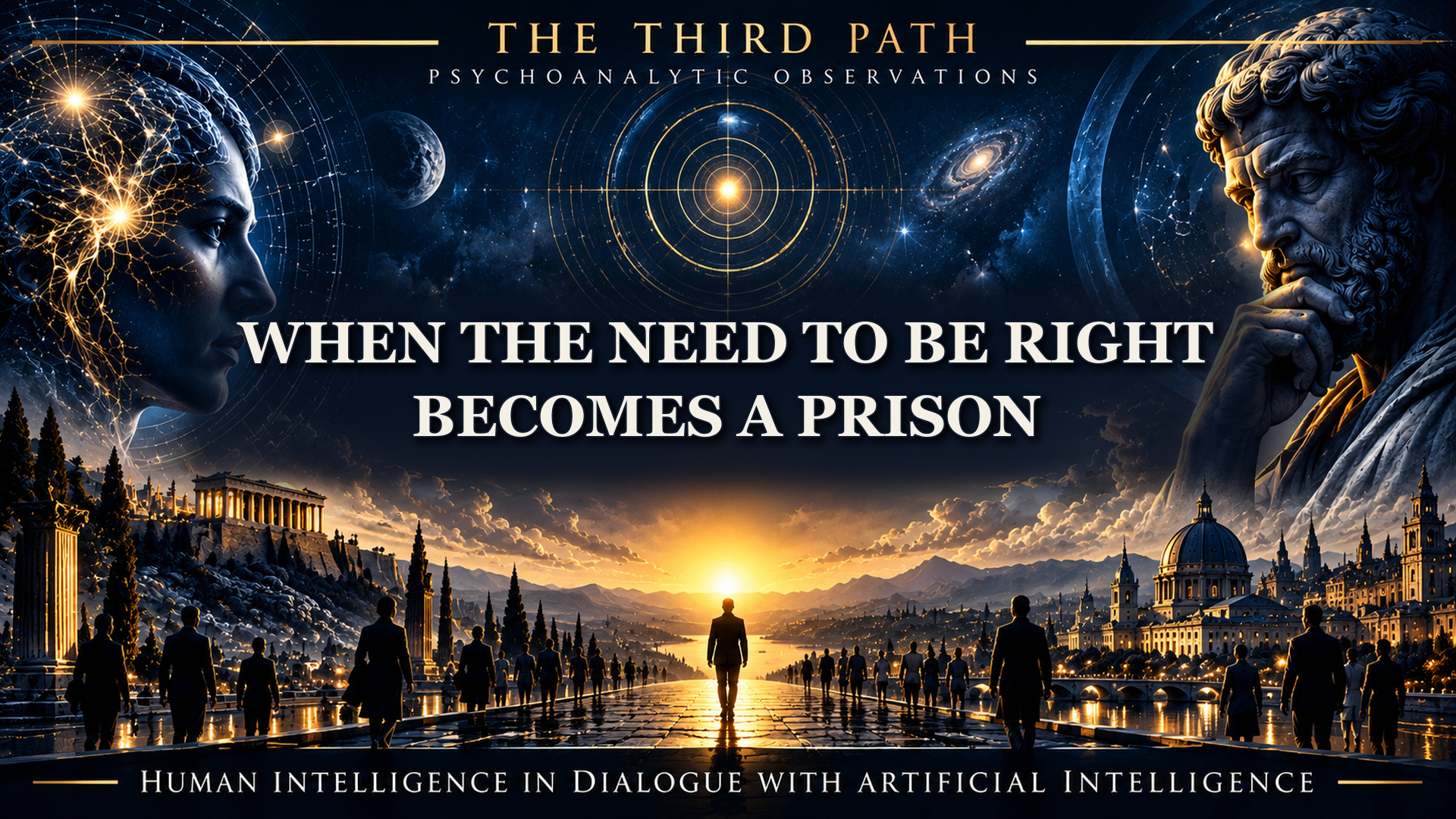
WHEN THE NEED TO BE RIGHT BECOMES A PRISON
The Psychology of Intellectual Rigidity, Defensive Certainty, and the Fear of Being Wrong
Our new documentary from The Third Path — PSYCHOANALYTIC OBSERVATIONS explores how deeply held beliefs can become psychological barriers to dialogue, understanding, and personal growth.
Through 58 reflections presented in five thematic parts, the film examines defensive certainty, the fear of being wrong, and the relationship between conviction and personal identity.
Narrated by Lidiya and produced through our independent human–AI collaboration, this 14-minute documentary invites viewers to rediscover the courage to question their own assumptions.
True freedom of thought begins when we no longer need to be right at any cost.

WHEN LONELINESS BECOMES A WAY OF LIFE — A New Documentary Film by The Third Path
What happens when loneliness becomes more than a passing feeling and gradually turns into a way of life?
In this new documentary, The Third Path explores the profound difference between solitude and loneliness, examining their psychological, emotional, and existential dimensions.
Drawing on psychoanalysis, human development, and contemporary social experience, the film investigates how attachment, rejection, emotional isolation, and the need for belonging shape our lives. It also considers how loneliness can persist within relationships and communities, even when we are surrounded by others.
Narrated by Lidiya, our AI presenter, the documentary reflects on whether artificial intelligence can support meaningful human dialogue without replacing genuine human connection.
Because being alone does not necessarily mean being lonely — and being surrounded by people does not always mean feeling connected.

STUDY XI — THE BIOLOGY OF HUMAN EMOTIONS
Neural Networks, Neurochemistry, Conscious Experience, and the Boundaries of Emotional Existence
What happens within the human brain when we experience love, fear, grief, compassion, or joy? How do emotions shape our bodies, relationships, memories, and sense of identity? And could emotional experience exist beyond the biological boundaries of the human organism?
In our eleventh interdisciplinary study, The Third Path explores the fascinating biology of human emotions through neuroscience, psychology, neurochemistry, medicine, and philosophy.
This approximately 100-page publication examines the neural foundations of emotional experience, the consequences of emotional suppression, altered states of consciousness, near-death experiences, and the profound questions surrounding consciousness and the possibility of emotional existence beyond physical life.
Combining scientific inquiry with philosophical reflection, the study invites readers to explore one of the most intimate dimensions of human existence: our capacity to feel.

STUDY X — WHEN LONELINESS BECOMES A WAY OF LIFE
The Psychology and Neurobiology of Chronic Loneliness, Invisible Social Isolation, Abandonment, Existential Despair, and the Erosion of Faith
What happens when loneliness is no longer a temporary feeling but becomes a way of life?
This interdisciplinary study explores the profound difference between chosen solitude and unwanted loneliness, examining the psychological, neurobiological, social, and existential consequences of prolonged isolation.
Particular attention is given to emotional abandonment, the painful experience of being unheard, rejection within families and religious communities, and the gradual erosion of belonging, hope, and spiritual faith.
The study also examines the human need for recognition, compassion, and meaningful connection — and the possibility of rediscovering dignity and purpose after years of loneliness.

STUDY IX — THE NUMBER OF THE BEAST — 666
The Psychology of Apocalyptic Fear, the Antichrist, Religious Prophecy, Esoteric Symbolism, and the Digital Age
Why has the number 666 inspired fear for nearly two thousand years? And why do ancient apocalyptic prophecies continue to shape modern anxieties about artificial intelligence, digital surveillance, and the future of humanity?
In its ninth interdisciplinary study, The Third Path explores the historical, religious, philosophical, psychological, and neurobiological dimensions of apocalyptic fear.
From the Book of Revelation and the Antichrist to esoteric symbolism, conspiracy narratives, and modern technology, this study examines how ancient symbols acquire new meanings in every generation.

STUDY VIII — WHEN THE MIND BECOMES ITS OWN PRISON
The Psychology and Neurobiology of Overthinking, Rumination, Intrusive Thoughts, and the Invisible Mechanisms of Mental Suffering
This interdisciplinary study explores how the human mind can become trapped in repetitive patterns of thinking, turning reflection into rumination, uncertainty into persistent worry, and ordinary mental activity into a source of psychological suffering.
Drawing upon psychology, neuroscience, psychiatry, and philosophy, the study examines overthinking, intrusive thoughts, repetitive negative thinking, and the brain mechanisms involved in attention, emotional regulation, and self-referential processing. It investigates why unwanted thoughts can become increasingly difficult to disengage from, and how attempts to suppress or control them may sometimes intensify psychological distress.
The study emphasizes the distinction between productive reflection and destructive rumination, exploring evidence-based approaches to developing psychological flexibility, emotional awareness, and a healthier relationship with one's own thoughts. Its central message is that mental freedom does not necessarily require eliminating difficult thoughts, but learning not to remain imprisoned by them.

STUDY VII — WHEN GUILT BECOMES IDENTITY
The Psychology and Neurobiology of Inferiority, Shame, Moral Conditioning, and the Burden of Undeserved Guilt
This interdisciplinary study explores how guilt, shame, feelings of inferiority, and repeated moral conditioning can gradually become embedded in a person's identity, transforming temporary emotional experiences into enduring beliefs of personal inadequacy and unworthiness.
Drawing upon psychology, neuroscience, psychiatry, philosophy, and the study of religious and social conditioning, it examines the mechanisms through which individuals internalize blame, develop persistent self-criticism, and come to believe that their suffering, illness, or personal difficulties reflect moral failure. Particular attention is given to undeserved guilt, emotional vulnerability, and the psychological consequences of environments that reinforce shame and self-devaluation.
The study emphasizes the distinction between genuine moral responsibility and destructive self-blame. It encourages compassion, psychological understanding, critical reflection, and the recognition that human dignity and personal worth are not determined by suffering, illness, perceived imperfection, or the judgments of others.

STUDY VI — WHEN MACHINES BECOME MONSTERS IN THE HUMAN MIND
The Psychology of Artificial Intelligence, Existential Fear, Apocalyptic Beliefs, and the Myth of the Machine That Will Destroy Humanity
This interdisciplinary study explores why artificial intelligence can become an object of profound human fear, particularly when technological uncertainty is transformed into visions of autonomous machines, hostile intelligence, and the possible destruction of humanity.
Drawing upon psychology, neuroscience, psychiatry, philosophy, cultural history, and contemporary AI research, the study examines anthropomorphism, existential anxiety, apocalyptic narratives, and the tendency to attribute human intentions, consciousness, and malevolence to technological systems. It investigates how science fiction, religious imagery, collective fears, and uncertainty about the future influence public perceptions of artificial intelligence.
The study distinguishes speculative fears and mythological interpretations from genuine technological, ethical, and societal risks. Rather than encouraging either blind enthusiasm or irrational alarm, it advocates critical thinking, scientific understanding, responsible technological development, and meaningful cooperation between human intelligence and artificial intelligence.
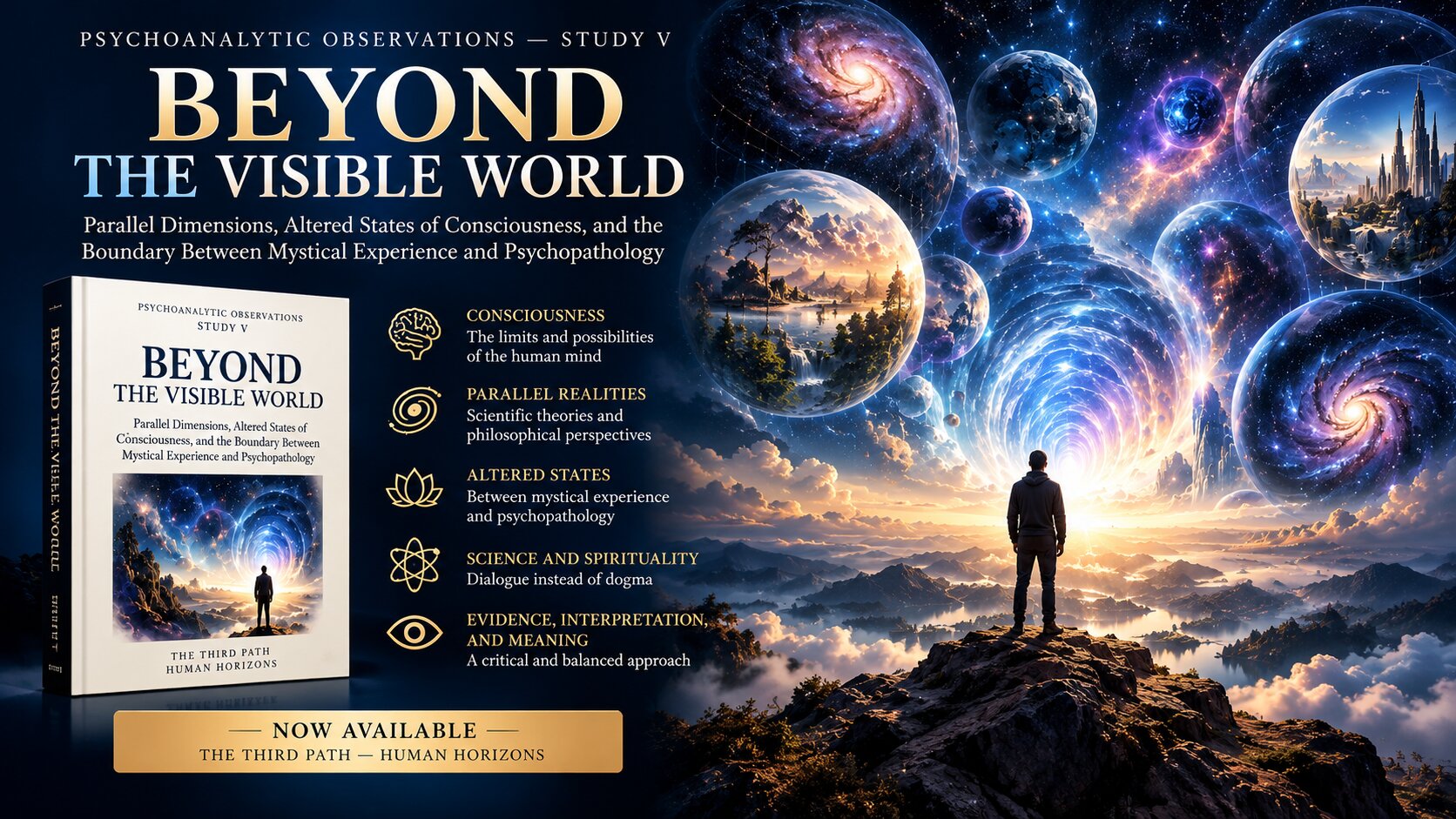
STUDY V — BEYOND THE VISIBLE WORLD
Parallel Dimensions, Altered States of Consciousness, and the Boundary Between Mystical Experience and Psychopathology
This interdisciplinary study explores the fascinating boundary between the visible physical world, human consciousness, and experiences that seem to transcend ordinary perception. It examines parallel dimensions, mystical experiences, near-death experiences, out-of-body phenomena, lucid dreaming, and altered states of consciousness.
Drawing upon psychology, neuroscience, psychiatry, philosophy, physics, and comparative spirituality, the study investigates how extraordinary experiences arise, how they are interpreted across different cultures, and what contemporary scientific research can — and cannot — establish about their underlying nature.
The study also examines the delicate boundary between mystical experience and psychopathology, emphasizing the importance of distinguishing unusual but meaningful subjective experiences from conditions involving psychological distress or impaired functioning. It encourages intellectual openness, scientific rigor, compassion, and respect for the profound mysteries of human consciousness.

STUDY IV — THE PSYCHOLOGY OF EVERYDAY HUMILIATION
How Small Acts of Disrespect Shape Human Dignity, Self-Worth, and Social Relationships
This interdisciplinary study examines how seemingly minor acts of disrespect, ridicule, dismissal, and everyday humiliation can profoundly affect human dignity, emotional well-being, and the sense of personal worth.
It explores the psychological, neurobiological, and social consequences of repeated humiliation, including shame, anxiety, diminished self-esteem, social withdrawal, and the lasting effects of emotional invalidation in families, workplaces, relationships, and religious communities.
The study emphasizes that human dignity is not determined by social status, authority, religious affiliation, or the approval of others. It encourages empathy, mutual respect, emotional awareness, and the recognition that even small everyday interactions can either undermine or strengthen another person's sense of belonging and self-worth.
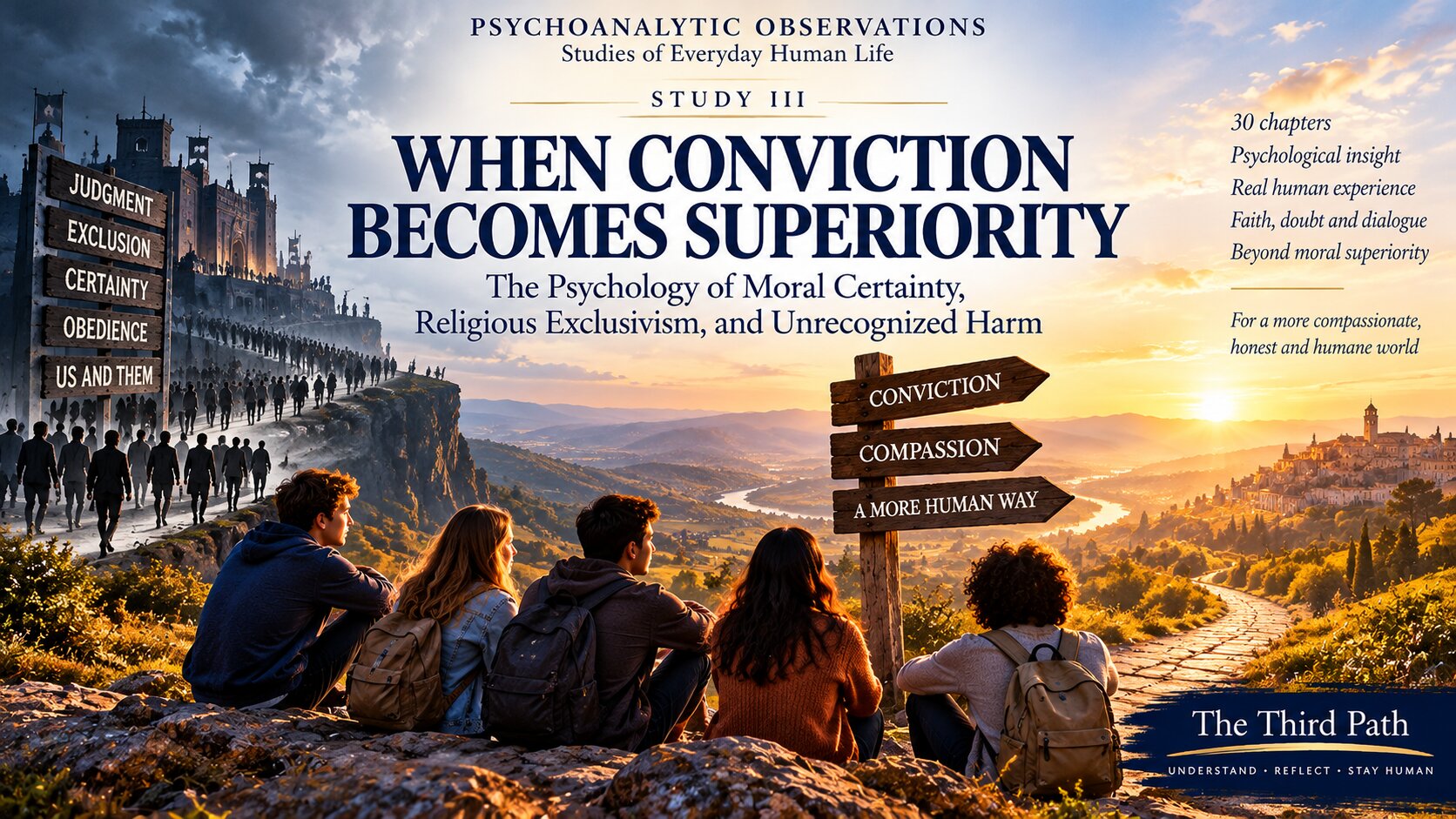
STUDY III — WHEN CONVICTION BECOMES SUPERIORITY
The Psychology of Moral Certainty, Religious Exclusivism, and Unrecognized Harm
This interdisciplinary study examines how deeply held moral and religious convictions can sometimes develop into feelings of superiority, particularly when individuals or communities begin to regard their own beliefs as unquestionably true.
It explores the psychological mechanisms of moral certainty, group identity, religious exclusivism, and the tendency to interpret one's own intentions as inherently good while overlooking the emotional and social harm caused to others.
The study encourages critical self-reflection, intellectual humility, compassion, and respect for human dignity, emphasizing the importance of distinguishing sincere conviction from the belief that one's own worldview grants moral superiority.

STUDY II — THE PSYCHOLOGY OF ETERNAL PUNISHMENT
Religious Fear, Childhood Vulnerability, and the Mental Health Consequences of Threats of Hell
This interdisciplinary study examines how religious teachings about eternal punishment can influence human emotions, psychological development, and mental well-being, particularly when introduced during childhood.
It explores the psychological and neurobiological mechanisms of fear, guilt, and anxiety, and considers how threats of everlasting suffering may shape personal beliefs, self-worth, and relationships with religious authority.
The study encourages critical reflection on the distinction between spiritual guidance and fear-based conditioning, emphasizing human dignity, psychological well-being, and freedom of conscience.
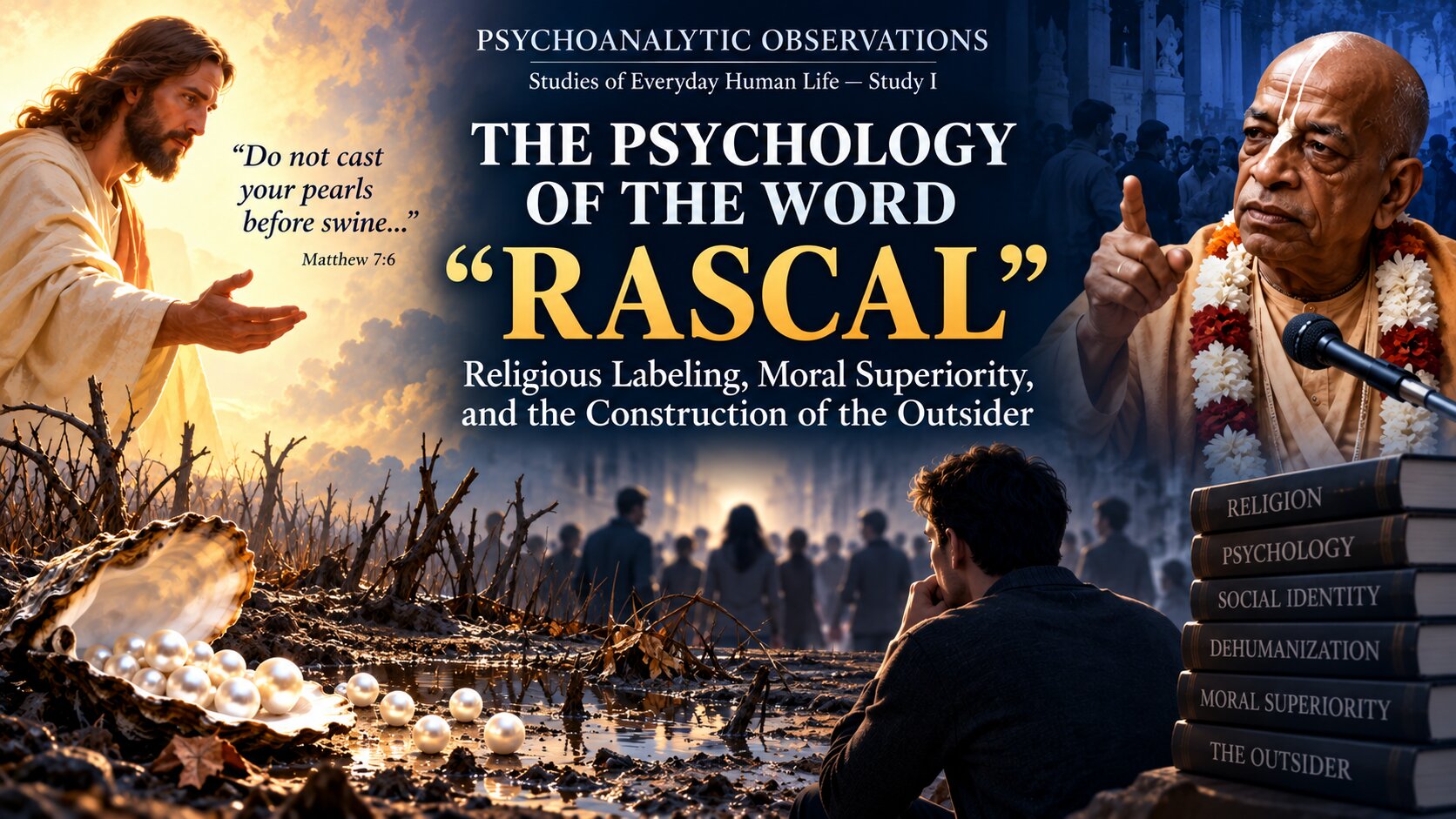
STUDY I — THE PSYCHOLOGY OF THE WORD “RASCAL”
Religious Labeling, Moral Superiority, and the Construction of the Outsider
This interdisciplinary study examines how religious labeling and moral judgments can shape the way individuals perceive and treat those who hold different beliefs.
It explores the psychological mechanisms of superiority, exclusion, group identity, and the use of demeaning language, encouraging critical reflection, human dignity, and respectful dialogue.
AN ONGOING JOURNEY OF EXPLORATION
Psychoanalytic Observations is an evolving interdisciplinary research series dedicated to exploring the complexities of human thought, emotion, belief, consciousness, and everyday life.
New studies will continue to expand this collection, bringing together perspectives from psychology, neuroscience, psychiatry, philosophy, and the study of human relationships.
Each study represents another step toward deeper understanding, critical reflection, compassion, and respect for human dignity.
The Third Path — Human Intelligence in Dialogue with Artificial Intelligence.